

How Much Money Do You Really Need to Retire in Canada? (Why “Magic Numbers” Fail)
Quick Summary
Looking for a single, clean target number for retirement? The honest truth is: it doesn’t exist. Whether you manage your own investments or work with an advisor, relying on standard rules of thumb—like saving 25 times your income or targeting $1,000,000—frequently fails. Everyone’s spending habits, tax brackets, and guaranteed income sources (like CPP, OAS, or workplace pensions) are completely unique.
Here’s A 5-Minute Retirement Shortfall Estimate
When I work with clients in the early stages of retirement planning, we start with a simple back-of-the-napkin process. Rather than guessing at a multi-million-dollar target, we calculate what it actually costs to live your life, factor in guaranteed government and pension benefits, and pinpoint your exact portfolio shortfall.
Below is a simplified overview of this calculation:

- Calculate Your Lifestyle Cost: Take your Current Gross Income and subtract every expense that won’t follow you into retirement (mortgages, EI/CPP taxes, RESPs, RSP contributions, pension deductions). What remains is your estimated Living Cost—what it costs to do the things you enjoy.
- Layer in Guaranteed Fixed Income: Gather your estimates for CPP, OAS, and Workplace Pensions. Early on, rough estimates are fine; as you get closer to your retirement date, these numbers sharpen into exact values.
- Pinpoint Your Portfolio Shortfall: Subtract your guaranteed income from your Estimated Living Cost. The remaining gap is your Retirement income Shortfall—the cash flow your investments must generate each year.
Once you have your shortfall number, you can work backward to establish your real target. You can test your numbers using my FREE CALCULATORS, franzvickerson.ca/retirement. (no email capture or sign-up required—just a clean, direct tool for your planning).
Why There Is No Clean Answer
You likely typed “How much do I need to retire?” into a search bar expecting a straight answer—a simple calculator result or a single fixed target number.
Here is why no online calculator can give you that number: generic formulas assume everyone lives the exact same life.
- The “25x Income” Myth: Telling someone they need 25 times their annual salary assumes their spending habits in retirement will mirror their working years.
- The “$1 Million” Standard: A fixed textbook target like $1,000,000 ignores local cost of living, healthcare needs, and actual spending patterns.
- The “4% or 5% Rule”: Assuming you can safely withdraw a flat percentage every year fails if you hit a severe stock market crash right after you retire.
In practice, households with portfolio sizes anywhere from $300,000 to multi-millions enjoy happy, stress-free retirements. Success does not come from hitting an arbitrary benchmark; it comes from understanding your specific cash flow needs and engineering a structure to support them.
Lifestyle Architecture: What Are You Actually Funding?
Before opening a spreadsheet or looking at investment returns, you have to ask a more fundamental question: What does your daily life actually look like when you stop working?
Retirement planning isn’t just about financial mechanics—it is about designing how you spend your time. In his work How to Retire Happy, Wild and Free, author Ernie Zelinski emphasizes that retirees who thrive focus on purpose and engagement first, using money as the fuel rather than the goal.
When designing your lifestyle architecture, consider these creative ways to balance life and budget:
- Educational & Experiential Travel: Programs like Road Scholar offer affordable group travel centered on learning, history, and community rather than expensive luxury resorts.
- Volunteer & Research Immersion: Participating in archaeological digs or environmental field projects often covers room and board in exchange for volunteer work, unlocking meaningful travel at minimal cost.
- Phased or Semi-Retirement: If you face a cash flow gap—or simply want a structured daily routine—stepping into semi-retirement can bridge the difference. Working part-time in an enjoyable field covers lifestyle shortfalls while reducing stress and keeping you socially connected.
Once you have a clear vision of your lifestyle, you can build a precise plan around the actual cost of that life.
How This Works in Practice: Applying My Framework
When I’m talking with clients and they are asking this question, no two conversations are identical—but the underlying challenge is always the same: Identifying how much do they need to retire? And then protecting it for the long term.
To solve this, I apply my proprietary framework—a structured method I’ve developed through years of working hands-on with clients to remove the guesswork from wealth management. The scenarios below serve as case studies demonstrating how I apply my strategy in real-world client situations, offering a look at my personal approach and opinion on how to structure these funds effectively.
While every financial roadmap must be tailored to the individual, here is how my method tackles this question.
Case Study: Engineering Your Estimated Target (A Real-World Walkthrough of how I estimate the answer)
To see how this works in practice, let’s look at how a household transitions from generic guesswork to an engineered cash-flow blueprint.
Consider John and Jane (both age 64). They earned a combined gross income of $160,000 per year (for illustration $80,000 each, living in BC) and assumed they couldn’t retire until they accumulated $2,500,000. Here is how we break down their real needs step-by-step.
Step 1: Calculate Your estimated Living Cost & Portfolio Shortfall
If you retire at age 65, your daily lifestyle expectations at 66 will look very similar to what they were at 64. However, your monthly expense sheet changes dramatically once you leave the workforce.

Strip Away Pre-Retirement Expenses
Start with what you earn today, then remove expenses that won’t follow you into retirement:
- Mortgages & Debt: Debt that will be fully paid off before or at retirement.
- Retirement Savings: Money you currently direct into RSPs or pensions.
- Family Expenses: Childcare and education savings (RESPs) that disappear as children become independent.
- Payroll Taxes & Deductions: CPP, EI, union dues, and workplace pension contributions that stop when you leave the workforce.
What remains is your Estimated Living Cost—the actual net cash required to maintain your lifestyle.
Layer in Guaranteed Fixed Income Sources
Next, subtract fixed income sources that do not rely on stock market performance:

- Canada Pension Plan (CPP): Verified directly through your Canada Revenue Agency (CRA) statements.
- Old Age Security (OAS): Predictable monthly baseline government benefits.
- Workplace Pensions: Fixed monthly distributions from defined benefit plans.
Identify the Shortfall
Subtract your guaranteed fixed income sources from your Estimated Living Cost. In John and Jane’s case, their estimated living cost is $67,200, and their fixed government benefits cover $47,735.
Their Annual Portfolio Shortfall is $23,567. That is the exact amount their investment portfolio must generate each year.
Step 2: Protect Your Withdrawals from Sequence of Returns Risk
In retirement, the single greatest threat to your income is Sequence of Returns Risk—being forced to sell stocks at a loss during a market crash to pay for daily living expenses.
If the stock market drops 20% right after you retire and you are forced to liquidate equities to cover your monthly bills, your portfolio may suffer permanent capital destruction. Standard rules like “withdraw 5% a year” sound simple on paper, but they fail in execution because most portfolios aren’t structured to separate short-term income needs from multi-decade growth.
To protect your withdrawals while maintaining long-term growth, you can structure your capital into dedicated functional components:
1. The Cash Wedge: Your Shock Absorber
Instead of taking monthly income directly from stock investments, build a Cash Wedge.

- How it Works: Hold 2 to 3 years worth of your annual portfolio shortfall ($100,000 to $150,000 for John and Jane) in safer, liquid, yield-generating assets.
- Why it Protects You: Putting 2-3 years of income in a Cash Wedge allows volatile markets to fluctuate up and down without exposing your short term needs to this volatility.
- The Result: When a bear market hits, you stop selling stocks entirely. You take your monthly retirement income directly from your Cash Wedge, giving your growth stocks the full two to three years they need to recover untouched.
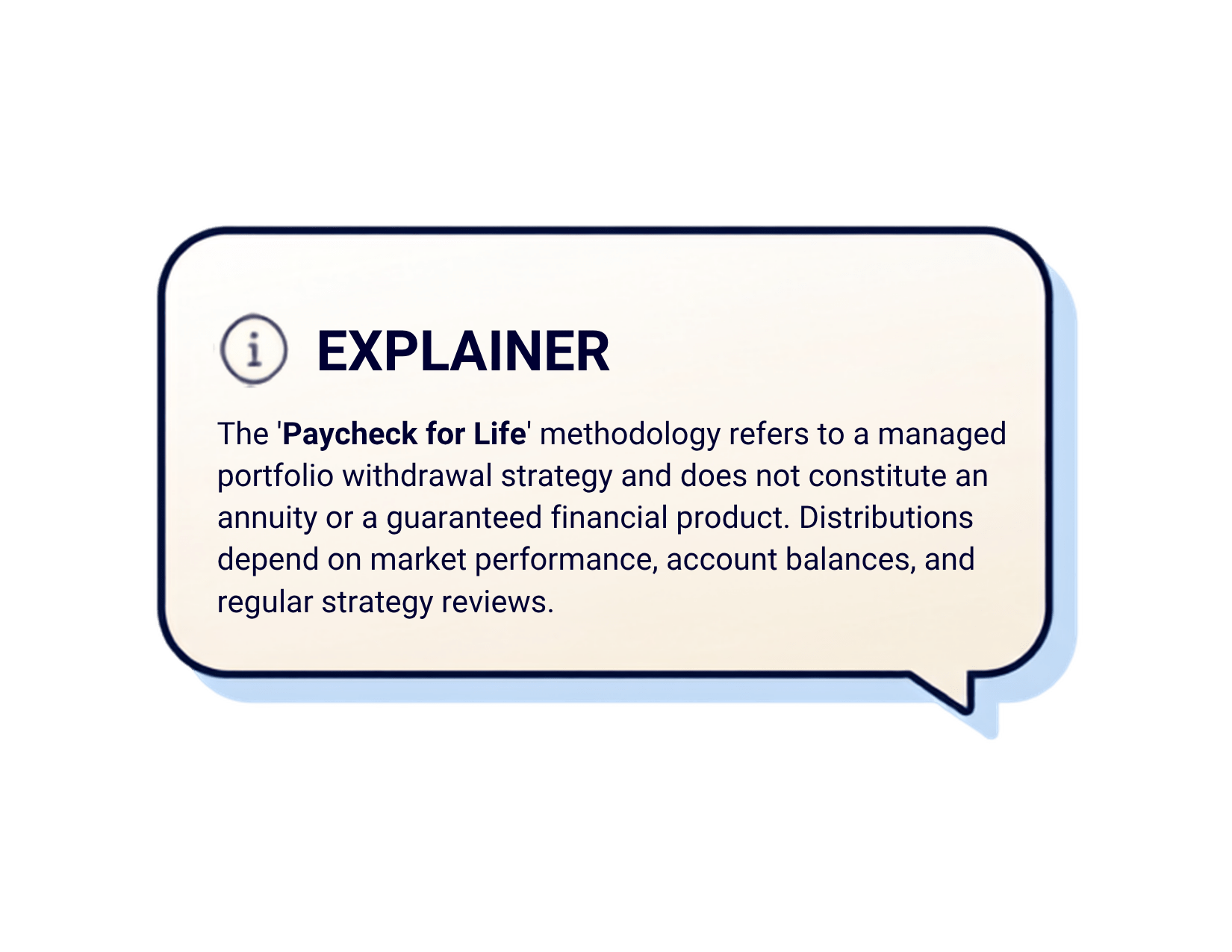
2. The Capital Shield: Generating Long-Term Growth
To keep your Cash Wedge refilled without taking unmapped risks, structure your broader portfolio with clear operational roles:

- The Growth Engine: Broadly Diversified Equities designed to outpace inflation and compound capital over 20 to 30 years.
- Income / Debt Fuel: Low-volatility fixed income, Canadian dividend-producing equities, and liquid alternatives built to generate steady, predictable yield.
- The Wildcat Accelerator: Dedicated capital positioned to capture value during rare market dislocations.
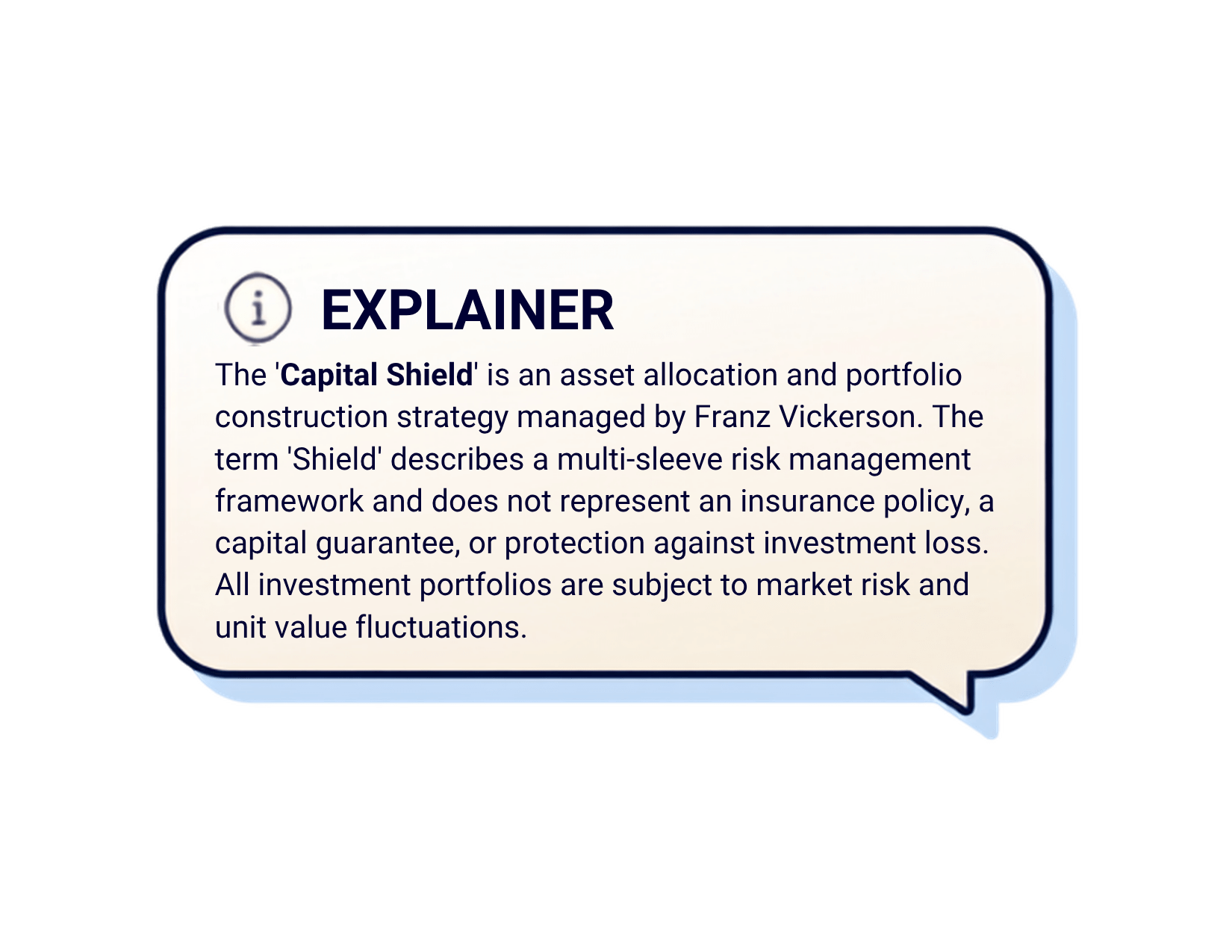
When stock markets perform well, harvest profits from your Growth Engine to top up your Cash Wedge. Combining these elements attempts to insulate your portfolio against sequence of returns risk while working to ensure your money continues growing throughout your retirement.
Step 3: Know What You Own (And Stay Ahead of Shortfalls)
A successful retirement plan is not something you set up once and leave on autopilot. When managing a retirement plan, knowing what you own and staying on top of it is critical to long-term survival.
If you do not regularly audit your income plan, subtle shifts in spending, unexpected tax changes, or market movements can quietly create a deficit years down the road. You want to identify potential concerns early so you can make proactive adjustments, rather than being surprised by a cash shortfall later in life.
To stay ahead of future issues, establish a disciplined review schedule. Within our institutional framework, we execute this through The Tri-Annual Cadence—checking in three times a year on specific areas of the financial plan:

By maintaining a regular review rhythm, you ensure you always know exactly what you own, where your monthly cash flow is coming from, and how to address any upcoming shortfall long before it impacts your daily life.
From Guesswork to Institutional Control
There is no single “magic number” that guarantees retirement security. Answering “How much do I need?” comes down to knowing your estimated lifestyle costs, factoring in guaranteed fixed income, protecting your withdrawals from sequence of returns risk, and maintaining continuous oversight over what you own.
Whether you choose to manage your own investments or seek institutional stewardship, replacing guesswork with a repeatable framework gives you confidence over your financial future.
Explore The Vickerson Philosophy to learn more about our 5 operational pillars for long-term wealth preservation.
Read about The Vickerson Method to see our complete 12-step architecture designed for $1M+ Canadian households.


